
-
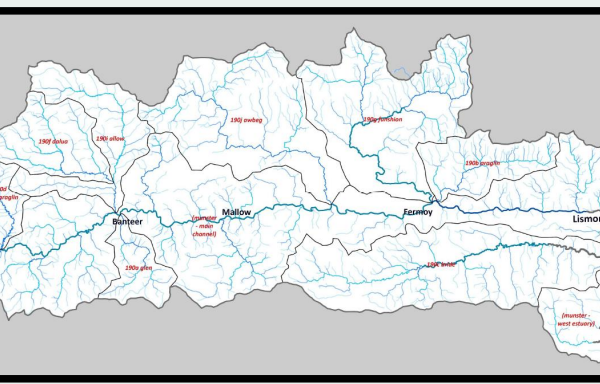
Newsletter Number 38 – Blackwater Genetic Study
Salmon Watch fully supports and endorses this important project. The information gathered through the collection and analysis of salmon, sea trout and brown trout scale samples will greatly enhance our collective understanding of the Blackwater catchment, its individual tributary systems and the contribution each makes to the overall fishery. Importantly, this work may help identify key production units within the catchment, highlight areas which may not currently be achieving their natural potential and guide future investigative, conservation and habitat improvement work. The success of the programme will depend heavily on support and participation from the angling community. We would therefore strongly encourage all anglers, clubs and fisheries interests to participate fully during the season by submitting scale samples wherever possible and promoting the project locally. Every sample collected contributes valuable scientific information and will help build a clearer picture of the future management and protection needs of the Blackwater system. Your support and cooperation are greatly appreciated. Blackwater Genetic Study - Newsletter Number 38
Continue reading -
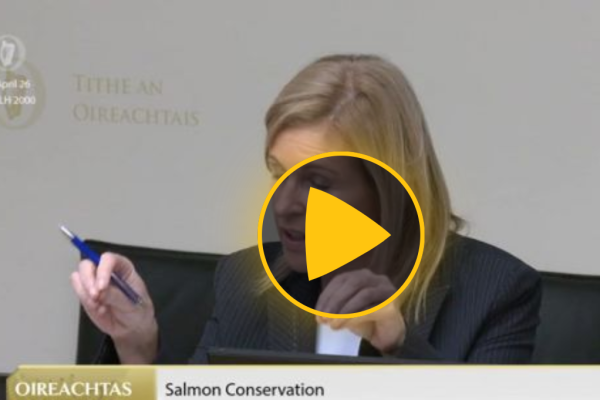
Joint Oireachtas Committee – Salmon Conservation – Newsletter Number 37
Across all submissions to the Committee, one message is clear: Atlantic salmon are in crisis. Despite some gaps in the data, the overall trend is unmistakable—stocks are in sustained decline. Now is the time to act decisively to halt and reverse that decline. In this newsletter, we outline the key evidence presented, reflect on the discussion at Committee level, and set out why current pressures on salmon—both in freshwater and at sea—require a far more precautionary and coordinated response. We also highlight a number of critical concerns, including: The continued exploitation of vulnerable stocks in certain river systems The need for a precautionary approach where even moderate surpluses are protected The importance of stronger alignment between policy and scientific advice The role all stakeholders, including recreational fishers, must play in conservation Alongside the newsletter, we have submitted a number of supporting materials, including our opening statement, a policy document, and additional evidence presented to the Committee. Links to video recordings of the session are also available. A full transcript will be shared once published. This is a pivotal moment. The decisions taken now will determine whether wild Atlantic salmon recover—or continue their path toward collapse. We encourage you to read and share the newsletter, and to continue supporting efforts to protect and restore this iconic species. Thank you for your continued support. Salmon Watch Ireland Newsletter Number 37
Continue reading -
Newsletter Number 36 – 10 April- Response to New Salmon Regulations
Please find the response of Salmon Watch Ireland to salmon regulations as signed into law in early April. Some positives but overall a disappointing outcome with little concrete advances to protect wild salmon. We ask that all anglers abide by the code of conduct as laid out in the newsletter. We hope for a better outcome for salmon into the future. While the weather presently is not conducive to angling, it is certainly a help in protecting adults returning and smolts will have an abundance of water to safely avoid serious predation pressures. Hopefully these conditions prevail until May. Newsletter Number 36 10 April 2026
Continue reading -

Newsletter Number 35 – 31 March 2026 -Pollution Portal Salmon Watch Ireland
We are pleased to announce the launch of a new Ireland Water Pollution Reporting Portal, designed to make it quicker and easier for the public to report suspected pollution incidents and help protect our rivers, lakes, and coastal waters. Recent events, including the devastating fish kill on the Blackwater and other serious pollution incidents across the country, have highlighted just how vulnerable our waterways are—and how important timely reporting can be. Early intervention can make a real difference in preventing long-term environmental damage. This portal brings together key reporting information in one place, helping you to: Identify pollution incidents Contact the correct authority quickly Follow a clear, standard reporting procedure Provide useful details (including photos and location) that support investigation and enforcement We strongly encourage anyone who spends time near water—anglers, farmers, walkers, and local communities—to make use of this resource. The resource is available on our website and can be downloaded to your phone if required. If you have any questions or feedback, please don’t hesitate to get in touch. Newsletter Number 35 - 31 March 2026
Continue reading -
Salmon Aquaculture – History and Information Resource
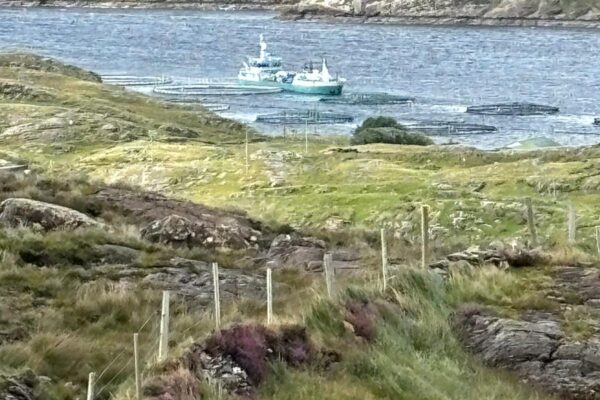
Salmon Watch Ireland has recently published its latest newsletter examining the relationship between salmon aquaculture and the future of wild Atlantic salmon and sea trout in Ireland. The newsletter outlines key issues currently being discussed in Ireland and internationally, including sea lice, disease risks, regulatory oversight, and the wider environmental debate surrounding open-net salmon farming in coastal waters. It also highlights the potential implications for wild salmonid populations that migrate through areas where aquaculture operations are located. We are sharing this publication as an information resource for the public and for anyone interested in the science, policy and environmental questions surrounding salmon aquaculture in Ireland. Further background information and related resources are also available on the Salmon Watch Ireland website: https://salmonwatchireland.ie/salmon-farming-ireland/ Please feel free to share this with colleagues or anyone who may have an interest in the future of wild salmon and sea trout.
Continue reading -
Salmon Watch Ireland Newsletter Number 33- 27 February 2026 Freshwater Survival Newsletter
This edition focuses on one of the most important, and often underestimated, stages in the salmon life cycle — freshwater survival before ocean entry. Drawing on long-term Irish research from systems such as the River Bush, Burrishoole, River Erriff, and southern rivers, the newsletter outlines: Evidence that significant mortality occurs during downstream migration The impact of low-flow, warm spring conditions on smolt survival The importance of discharge timing and spring freshets Increased risks associated with long estuaries How freshwater stress can compound with marine parasite pressures The critical role of genetic integrity and environmental stability The consistent message from Irish datasets is clear: freshwater conditions are not neutral — they strongly shape marine survival outcomes. We also introduce Hydronet, a comprehensive river data resource covering water height and temperature, which may be of interest to anyone examining historical or current river conditions. Freshwater survival is one of the most manageable stages in the salmon lifecycle, and protecting natural flow regimes, limiting abstraction during migration, maintaining connectivity, and reducing thermal stress can all make a measurable difference. I hope you find this edition informative and useful. As always, we welcome feedback and discussion Newsletter Number 33 - Freshwater Migration
Continue reading -
Pelagic Fisheries and Salmon
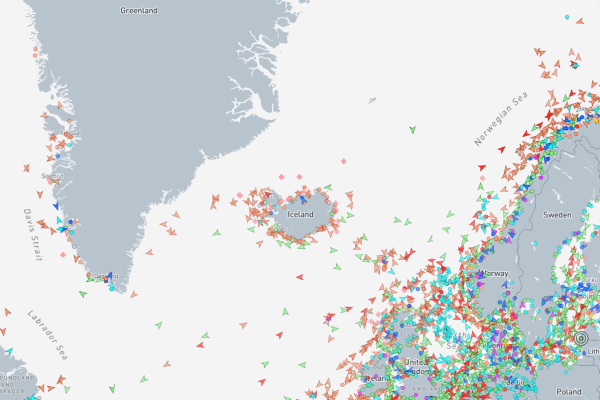
We are pleased to share Newsletter 32 (19 February 2026) from Salmon Watch Ireland, focusing on emerging evidence of Atlantic salmon bycatch in pelagic fisheries of the Nordic Seas. This edition highlights: Documented salmon catches during the International Ecosystem Summer Survey in the Nordic Seas (IESSNS), including 126 salmon recorded in 2025 surface trawls. Growing international policy attention, with Atlantic salmon formally added to the ICES list of species of bycatch relevance. The westward expansion of mackerel fisheries since 2005–2007 and the implications for salmon during critical marine feeding migrations. Concerns regarding the blue whiting fishery around the Faroe Islands during the March–April period. Reflections on improved salmon size and returns in 2020 during reduced pelagic fishing effort, and what this may (and may not) indicate. The evidence demonstrates clear spatial overlap between offshore pelagic fisheries and salmon during key marine phases. While comprehensive North Atlantic bycatch estimates remain unavailable, systematic reporting is now being formalised — an important step forward. Our policy position is straightforward: improved monitoring, mandatory and standardised reporting, genetic identification of any salmon caught, and greater integration of ecosystem and fisheries data are essential to ensure pelagic fisheries do not contribute avoidable additional mortality to vulnerable salmon stocks. Our aim remains unchanged: to keep all interested parties informed so that responsible, evidence-based conservation can take place. This is a space for constructive contribution and shared understanding. Above all, our collective objective is clear — more salmon reaching their spawning grounds, not fewer. Thank you for your continued support. Newsletter Number 32 - Feb 20 2026
Continue reading -
A changing ecosystem – The decline of Atlantic salmon
In this issue, we introduce recent peer-reviewed scientific research that provides important insight into the continuing decline of Atlantic salmon at sea. While much attention has focused on rivers, the evidence increasingly shows that the greatest losses are occurring in the marine environment — particularly in the critical early weeks after young salmon enter the ocean. Three recent studies point to a major ecosystem shift in the Northeast Atlantic around 2005, with long-term declines in plankton productivity and marine energy availability. The findings suggest that reduced food availability — rather than simple temperature “shock” — is now a key driver of lower growth and survival. The implications are significant. If marine productivity remains depressed, recovery to historic salmon abundance will be extremely difficult without addressing every avoidable human pressure, both at sea and in coastal waters. This newsletter summarises the headline findings and provides links to the three scientific papers. We hope you find it informative and, as always, we welcome your feedback and continued support. Newsletter Number 31 - 10 Feb 2026
Continue reading -
Newsletter Number 30 – 07Feb 2025
Salmon Watch Ireland response to updated draft tagging regulations Salmon Watch Ireland acknowledges that the updated draft Wild Salmon and Sea Trout Tagging Scheme Regulations 2026 include measures that continue to provide important protection for spring salmon, particularly through the retention of strict controls outside the main summer harvest period. The organisation recognises the importance of safeguarding early running fish, which remain under pressure in many river systems. However, Salmon Watch Ireland is concerned by several elements of the revised draft, particularly where changes represent a reduction in precaution compared with the previous draft regulations. 2026
Continue reading -
Newsletter Number 29 – 30 January 2025
The newsletter opens with an overview of a recent Canadian federal court ruling on salmon aquaculture, which confirmed the right of governments to act decisively and precautionarily in defence of wild salmon, even where such decisions carry significant economic consequences. This case provides a timely and relevant international context for policy and regulatory decisions now facing Ireland. The article then turns to domestic matters, including the proposed Wild Salmon and Sea Trout Tagging and Conservation Regulations, the scientific rationale for strengthened probability thresholds at Conservation Limit, the treatment of rivers assessed as having no exploitable surplus, and the implications of departing from established scientific and management advice. It also addresses the management of recreational exploitation, the protection of early-running fish, and Ireland’s obligations under EU conservation and Nature Restoration law. The intention of the newsletter is to contribute constructively to ongoing discussion by setting out the conservation, governance, and legal context in a clear and accessible way, while emphasising the need for evidence-led, precautionary decision-making in the face of continued stock decline. I hope you find it useful and informative, and I look forward to further engagement on these issues.
Continue reading