
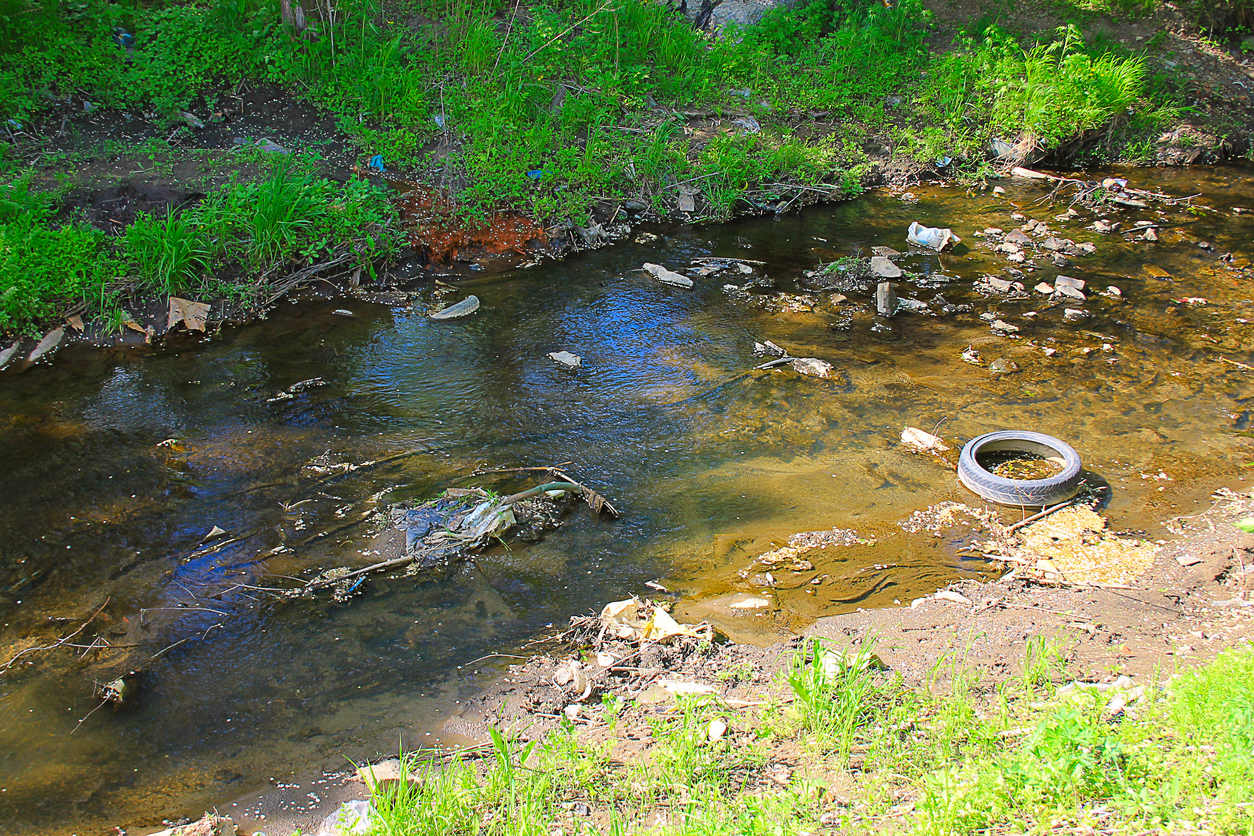
If it is safe to do so, you may take clear photos or short video of the incident. However, your first priority should always be to make a phone call to the relevant authority so the issue can be addressed as quickly as possible. Images or video can be very useful and may be required at a later stage to support an investigation, including potential upload to systems used by local authorities, Inland Fisheries Ireland, or the EPA. Try to capture the pollution itself, any suspected source, and surrounding landmarks so the location and nature of the incident can be clearly verified. Please note that the EPA’s complaint form is not monitored on a 24/7 basis and should not be relied upon as the primary method of reporting an active incident.
Download SEE IT, SAY IT (EPA App for reporting pollution)
One place to report water pollution, fish kills, slurry runoff, and suspected discharges
This page is designed as a practical public resource for reporting pollution, understanding who to contact, and finding guidance on fish kills, agricultural pollution, point and diffuse sources, and enforcement routes in Ireland.
What to do first
Contact guidance
Use the National Environmental Complaints Line for general environmental complaints.
If the source is an EPA-licensed facility, contact the EPA as well.
LoCall: 0818 33 55 99
HQ: 053 916 0600
Email: info@epa.ie
EPA complaint page
Search the EPA licence registers and LEAP Online for site, operator, town, Eircode, or licence type.
Standard reporting procedure
Call the National Environmental Complaints Line (NECL) on 1800 365 123. Phone is best for active pollution.
State the location, what you can see or smell, whether it is ongoing, and what source you suspect.
Your complaint details can be logged and passed on for follow-up.
Authorities may require immediate action to stop the discharge and limit harm.
Environmental enforcement action may follow where offences are identified.
Call script and checklist
- Exact location: river, stream, lake, drain, townland, Eircode, grid reference, or pin.
- What you can see: discolouration, foam, oil sheen, odour, dead fish, solids, sludge, or runoff.
- What source you suspect: pipe, outfall, field runoff, drain, tank, factory, yard, sewer, or spill.
- Whether the pollution is happening right now or has already stopped.
- Photos or video only if safe to take them.
- Your name and callback number if you are willing to be contacted.
Incident notes
Find my location
If you are on site, use your phone to capture your location before making a report.
Fish kills and fisheries damage
Also report fish kills, distressed fish, damaged spawning grounds, or visible fish habitat damage.
When to make a dual report
Report to both NECL and IFI when you see dead fish, distressed fish, discoloured water around a fish kill, or suspected damage to spawning beds or habitats.
What IFI usually focuses on
IFI focuses on fish kills, fisheries damage, aquatic habitat impacts, and prosecution of fisheries offences linked to pollution.
What NECL does
NECL records environmental complaints and routes them for follow-up.
Incident notes
Find my location
If you are on site, use your phone to capture your location before making a report.
Point / direct source
Pollution entering water from a single identifiable point such as a pipe, drain, or outfall.
Diffuse source
Pollution entering water from many scattered places across land, often after rainfall.
County / City Council
Local authorities are responsible for investigating and prosecuting many water pollution offences under water pollution legislation.
NECL
Primary reporting line for environmental complaints.
Inland Fisheries Ireland
Pollution offences where fish, fisheries, or aquatic habitats are harmed.
EPA
Pollution by licensed industrial or waste facilities and licence breaches.
An Garda Síochána
Related criminal matters or support for serious environmental investigations.
Quick rule
Report first to the National Environmental Complaints Line (NECL): 1800 365 123.
Local authorities such as County and City Councils investigate and can prosecute many pollution offences.
Inland Fisheries Ireland: 0818 34 74 24
Agricultural pollution prevention
This section explains good farming practice, slurry spreading dates, inappropriate spreading, farmyard maintenance, and what details should be reported where agricultural pollution is suspected.
Open spreading season by zone
| Zone | Counties | Spreading permitted from | Closed period begins |
|---|---|---|---|
| Zone A | Carlow, Cork, Dublin, Kildare, Kilkenny, Laois, Offaly, Tipperary, Waterford, Wexford, Wicklow | 13 January | 15 October |
| Zone B | Clare, Galway, Kerry, Limerick, Longford, Louth, Mayo, Meath, Roscommon, Sligo, Westmeath | 16 January | 15 October |
| Zone C | Cavan, Donegal, Leitrim, Monaghan | 1 February | 15 October |
Closed period generally begins on 1 November.
Closed period generally runs during December for milk suppliers.
Distances to watercourses
- Keep slurry and organic fertiliser at least 5 metres from rivers, streams, drains, lakes, and surface waters.
- Use greater setbacks where required near drinking water abstraction points or vulnerable features.
- Never spread where visible runoff to a drain or watercourse is likely.
Do not spread on
- Waterlogged or flooded land
- Frozen or snow-covered ground
- Fields where heavy rain is forecast
- Land where slope and proximity to water make runoff likely
Call the National Environmental Complaints Line (NECL) on 1800 365 123 if slurry is being spread outside the permitted dates or on unsuitable land.
If slurry has entered a stream, drain, river, lake, or fish are affected, also call IFI immediately on 0818 34 74 24.
What to include in a report
- Exact location and nearest landmark
- Date and time you observed the activity
- Whether spreading appears to be on unsuitable ground
- Whether runoff is entering a drain or watercourse
- Photos or video if safe
- Whether fish or wildlife appear affected
Generate slurry complaint notes
Find my location
If you are on site, use your phone to capture your location before reporting slurry runoff or inappropriate spreading.
Slurry management
Good farming practice means keeping nutrients on the land and out of water.
- Have adequate slurry storage for the closed period
- Inspect tanks, channels, and sumps regularly
- Use slurry only during the open season and in suitable weather
- Maintain distances from streams, drains, lakes, and wells
- Use low-emission spreading methods where possible
Good farming practice
Do not spread slurry during winter closed periods, on saturated land, or when heavy rain is likely. Proper timing, suitable ground conditions, and good infrastructure are essential to protect water quality and fisheries.
Drainage and dirty water control
- Separate clean rainwater from contaminated runoff
- Direct dirty water to a slurry or dirty water tank
- Prevent contaminated water entering storm drains
- Check channels and gullies regularly
Silage and yard upkeep
- Maintain silage pits on impermeable bases with collection systems
- Repair cracks in concrete and damaged drains
- Keep yards clean and prevent overflows from tanks and sumps
- Inspect farmyard infrastructure before wet weather
Why this matters
Most agricultural pollution happens through runoff, drains, or failures in storage and yard systems. Good practice focuses on containment, timing, placement, and maintenance.
If slurry, silage effluent, or contaminated runoff enters water, report it to NECL and IFI where fish or fisheries are harmed.
Quick farming checklist
- Check tanks, drains, channels, and sumps regularly
- Never spread outside permitted dates or in unsuitable conditions
- Keep slurry and effluent away from watercourses and wells
- Separate clean and dirty water systems
Important note
This page is designed as a practical reporting hub. Contact details and operational arrangements can change, so the reporting information should be reviewed regularly to ensure it remains accurate and up to date.