
-
Analysis – Electro Fishing Report 2024 – Newsletter Number 47 (17 September 26)
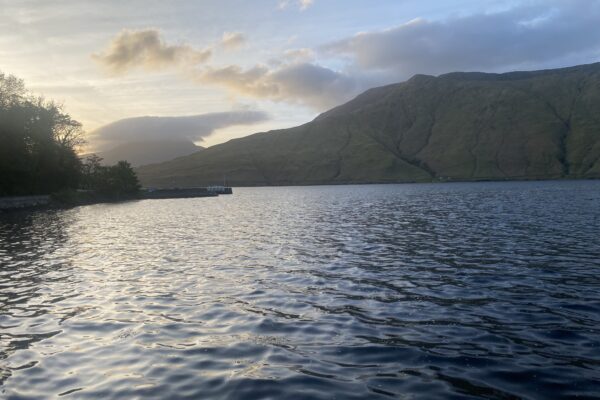
Analysis - Electro Fishing Report 2024 Dear Supporter, Salmon Watch Ireland’s latest newsletter examines Inland Fisheries Ireland’s 2024 Salmon Monitoring Programme and what its findings tell us about the condition of Ireland’s wild Atlantic salmon. The report covers electrofishing surveys across 41 catchments and sub-catchments, measuring juvenile salmon abundance at 969 sites. Results ranged from rivers where no salmon fry were recorded to strong juvenile production in rivers such as the Cloonee in Kerry. Our analysis also considers the River Erriff, Ireland’s National Salmonid Index Catchment, where only 1.3% of PIT-tagged smolts from the 2023 cohort were subsequently detected returning as adults. We examine this exceptionally poor survival alongside the timing of smolt migration, salmon-farm activity and recorded sea-lice levels in Killary Harbour. These results demonstrate why salmon must be protected throughout their lifecycle—from spawning and juvenile habitat in freshwater to their migration through estuaries, coastal waters and the wider North Atlantic. Please read our analysis and consult the full IFI report to see how your own river or catchment performed during 2024. The 2023 Erriff report which discusses sea trout in the newsletter is available here: Erriff Report 2023 Report on Electro Fishing 2024 - Newsletter Number 47 - 17 September 2026
Continue reading -
Salmon Watch Ireland Annual Conference – Athlone 2026
Dear Supporter, We are delighted to invite you to the Salmon Watch Ireland Annual Conference, taking place on Saturday, 14 November 2026 at the Sheraton Athlone Hotel. This year’s conference brings together scientists, fisheries professionals, environmental organisations and those working directly on our rivers to examine the challenges facing Ireland’s wild Atlantic salmon and the practical measures needed to support their recovery. The programme will explore Ireland’s National Salmonid Index Catchment on the River Erriff, providing an insight into the long-term monitoring and research used to understand changes in our salmon and sea-trout populations. Other topics include water quality and agriculture, river barriers and restoration, the genetic impacts of farmed salmon escapes, and the Munster Blackwater fish kill one year on. We will hear about the latest science, progress with practical restoration measures and first-hand experience of the pressures affecting our rivers and fisheries. At a critical time for the Atlantic salmon, the conference will bring together science, experience and practical solutions and consider what more can be done to protect and restore Ireland’s wild salmon and the rivers upon which they depend. Please see the conference programme for full details. Conference Link We hope you can join us in Athlone on 14 November.
Continue reading -

Newsletter Number 46 – What Ireland’s Fish Counters are Telling Us
Dear Supporter, Please find attached Newsletter 46, in which we take a detailed look at Inland Fisheries Ireland’s latest fish-counter data and what the results tell us about the changing fortunes of Ireland’s wild salmon and sea trout. The five-year comparison presents a mixed picture. There are encouraging signs on rivers such as the Feale, Eske and Kerry Blackwater, while the exceptionally poor result from the Lackagh and the continuing weakness of salmon returns to the Erriff underline the seriousness of the challenges facing many stocks. We also look more closely at the Erriff sea-trout population and salmon farming in Killary Harbour. Combining counter results with IFI tagging and telemetry studies and Marine Institute sea-lice monitoring provides important evidence of the relationship between farm conditions, lice pressure and wild sea-trout survival. The increase from 844 sea trout in 2023 to 1,356 in 2024 and 2,089 in 2025 is particularly noteworthy. The newsletter also highlights the encouraging performance of the Feale, where catch-and-release and the absence of commercial exploitation are allowing more returning salmon the opportunity to reach the spawning grounds. Finally, we consider the continuing gaps in Ireland’s fish-counter network, particularly at Waterville/Currane, and why reliable long-term monitoring must be central to future salmon conservation. We hope you find the newsletter informative and, as always, welcome your comments and observations. Newsletter Number 46 - 2025 Consolidated Fish Counter Report
Continue reading -
Newsletter Number 45 -every fish counts
Dear Supporter, Our latest Salmon Watch Ireland Newsletter is now available. In this edition, we update you on our appeal against the renewal of the Deenish Island salmon farm licence, remind anglers of mandatory catch and release from 1 September following a particularly difficult summer for salmon, provide an update on the Munster Blackwater genetic study, and remind everyone to remain vigilant and report pollution through our Pollution Reporting Portal. We also ask you to save the date – Saturday, 14 November 2026 – for the Salmon Watch Ireland Conference in Athlone. Thank you, as always, for your continued interest and support for the conservation of Ireland's wild Atlantic salmon. Newsletter Number 45- Salmon Watch Ireland Aug 30
Continue reading -
Newsletter Number 44 – Section 19 A4 to be repealed
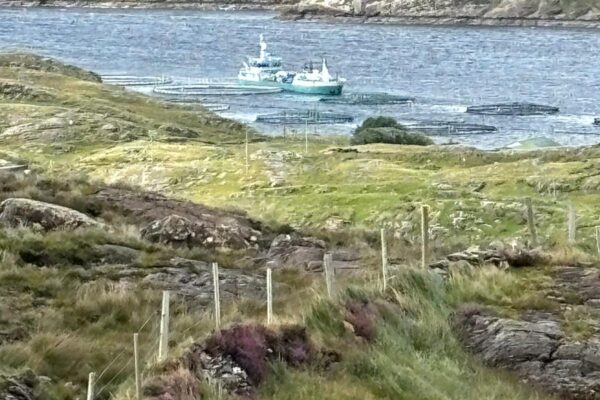
Our latest Salmon Watch Ireland newsletter marks an important development in a campaign we began six years ago. In 2020, Salmon Watch Ireland made a formal complaint to the European Commission concerning Ireland's aquaculture licensing system and the continued operation of aquaculture facilities after their licences had expired under Section 19A. The Government has now published the Draft General Scheme of the Fisheries (Amendment) Bill 2026, which proposes the repeal of Section 19A(4). This is an important achievement and a significant outcome from the European process which followed our complaint. However, as our newsletter explains, repeal is only part of the story. The proposed legislation would introduce a new system of temporary licence extensions, and we believe important safeguards are still required. In Newsletter 44, we examine the new proposals and explain why previous production performance, mortalities, disease, sea lice, escapes and licence breaches must be considered before further operation is permitted. We also address the need for public scrutiny, meaningful environmental assessment, effective appeals, stronger enforcement and financial bonds to ensure operators—not the taxpayer—carry responsibility for environmental liabilities. We also reiterate our fundamental policy position: open-cage finfish farming is environmentally unsustainable and Ireland should begin a planned transition to land-based closed containment. After six years of pursuing this issue, the proposed repeal of Section 19A(4) demonstrates that persistent engagement with Irish and European institutions can produce meaningful change. But the work is not finished. We will continue to engage as the legislation progresses to ensure that what replaces Section 19A(4) provides genuine protection for wild Atlantic salmon, sea trout and the wider aquatic environment. We hope you will take the time to read Newsletter 44 – Six Years of Persistence: Salmon Watch Ireland's Section 19A Campaign Reaches a Critical Point. Newsletter Number 44 - Section 19 Repeal
Continue reading -
Ireland’s Summer Heatwave – A wake-up call for wild Atlantic salmon
This summer has provided a stark reminder of how quickly Ireland's climate is changing. Prolonged periods of warm weather, low river flows and increasingly intense rainfall events (if they arrive) are no longer exceptional—they are becoming an increasingly familiar feature of our summers. In this edition of the Salmon Watch Ireland newsletter, we examine how these changing weather patterns are affecting wild Atlantic salmon at every stage of their life cycle. From juvenile salmon struggling to survive in warm, shrinking rivers to adults delayed in estuaries where predation risk increases, the evidence demonstrates that climate change is becoming one of the defining challenges for salmon conservation. The newsletter also explores why restoring the resilience of our river catchments must now become a national priority. We highlight the urgent need for mandatory riparian buffer zones, stronger controls on nutrient pollution, improved land drainage management, natural water retention measures and the restoration of spawning habitats if Ireland's rivers are to remain capable of supporting healthy wild salmon populations in the decades ahead. Climate change cannot be viewed in isolation. It is magnifying the impacts of existing pressures on our rivers, making it more important than ever that we reduce every avoidable human impact on this iconic species. We hope you find this edition both informative and thought-provoking, and we thank you, as always, for your continued support of Salmon Watch Ireland and our work to secure a future for wild Atlantic salmon. Newsletter Number 43
Continue reading -
Newsletter Number 42 – Temperature Protocol / Information Commissioner / Joint Oireactas
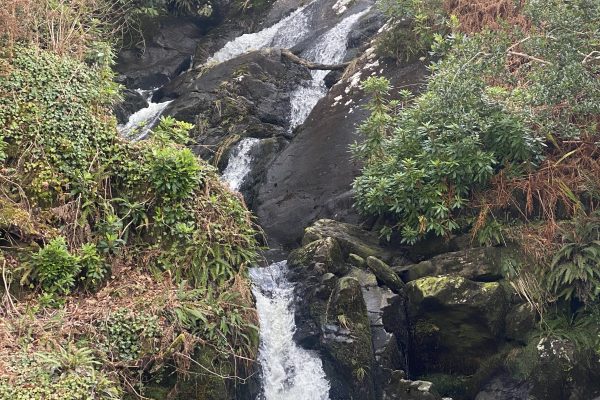
This edition focuses on a number of important developments affecting wild Atlantic salmon and sea trout, including Inland Fisheries Ireland's new scientific guidance on managing fisheries during periods of high water temperature and the increasing challenges posed by climate change. We also provide an update on our recent engagement with the Joint Oireachtas Committee on Fisheries and Maritime Affairs and the Joint Committee on Climate, Environment and Energy where we highlighted concerns regarding exceptionally high mortality rates in Ireland's salmon farming industry and the need for greater transparency. Finally, we report on our successful appeal to the Office of the Information Commissioner, which resulted in the release of previously withheld salmon farm mortality, stocking and harvest data. We outline the significance of this decision and the further steps Salmon Watch Ireland has taken to improve transparency and public participation in aquaculture licensing. As always, thank you for your continued support. Working together, we can continue to advocate for evidence-based policies that protect and restore Ireland's wild Atlantic salmon and sea trout.
Continue reading -
Newsletter Number 41 – 26 June 2026
Welcome to Newsletter No. 41 from Salmon Watch Ireland. As we move into the height of summer, our wild salmon and sea trout face increasing challenges from warming rivers, declining marine survival and ongoing human pressures. This edition examines the latest scientific evidence, including the newly published Norwegian Scientific Advisory Committee report, which concludes that salmon farming and climate change remain the two greatest human-induced threats to wild Atlantic salmon. We also report on the recent Joint Oireachtas hearings on aquaculture, where contrasting views were presented on the impacts of open-net salmon farming, and outline our recent submissions on proposed salmon farm developments and Ireland's Draft National Restoration Plan. In addition, we highlight a new national protocol for investigating fish kills and discuss why protecting salmon during periods of high water temperature is becoming increasingly important for both juvenile and adult fish. As always, we thank our supporters for their continued encouragement. Your support enables us to advocate for stronger protection of Ireland's rivers and to ensure that decisions affecting wild salmon are informed by the best available science. We hope you enjoy this edition and, as always, welcome your comments and feedback. Newsletter Number 41 26 June 2026
Continue reading -
NASCO Conference 2026 – Aviemore, Scotland
This year's meeting took place against a backdrop of continuing declines in wild Atlantic salmon populations across much of the North Atlantic. Governments, Indigenous Peoples' representatives, NGOs, scientists, and fisheries managers gathered to review the latest scientific advice, assess conservation progress, and consider the actions needed to reverse these troubling trends. The newsletter highlights several significant developments from the meeting, including: The introduction of Conservation Commitment Reports (CCRs) and NASCO's new accountability framework; Adoption of new habitat protection, restoration, and improvement guidance; Continued concerns regarding climate change and declining salmon abundance; The ongoing impacts of aquaculture on wild salmon populations; Growing recognition of marine mortality and fisheries bycatch as major conservation challenges; The failure of the West Greenland Commission to agree a new regulatory measure for the 2026 fishery; and The priorities and concerns raised by accredited NGOs during the meeting. While important progress was made, particularly in habitat restoration and conservation planning, the meeting also underscored the urgency of the challenges facing wild Atlantic salmon. The discussions reinforced the need for stronger international cooperation, greater ambition in conservation actions, and increased attention to the pressures salmon face throughout their marine migration. We hope this newsletter provides a useful overview of the meeting and contributes to ongoing discussions about the future of wild Atlantic salmon conservation. As always, we welcome your feedback and look forward to continuing to work together to secure a future for this iconic species across the North Atlantic. Newsletter Number 39 - Salmon Watch Ireland NASCO Conference Scotland June 26
Continue reading -
River Glyde – A n Ecological Disaster
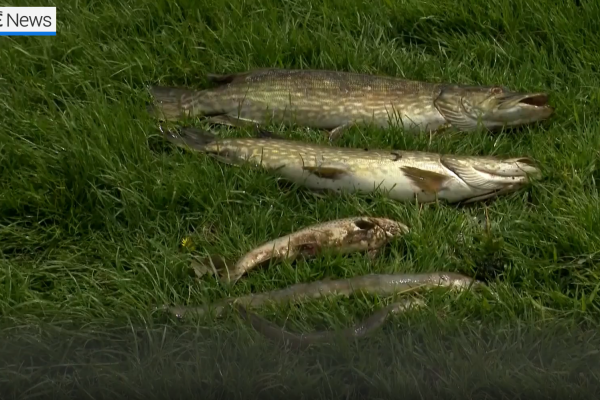
This edition is dominated by the devastating fish kill on the River Glyde, one of the most significant environmental incidents affecting a salmonid river in recent years. We outline the facts currently available, our response to the incident, and the broader implications for river protection and water quality management in Ireland. As always, thank you for your continued support. Salmon Watch Ireland remains committed to advocating for stronger protection of our freshwater ecosystems and ensuring that wild salmon and sea trout remain an integral part of Ireland's natural heritage for future generations. We encourage you to share this newsletter with friends, colleagues and anyone interested in the future of Ireland's rivers. Salmon Watch Ireland River Glyde Newsletter Number 40
Continue reading