
-
New Study on plankton in North Atlantic – Atlantic Salmon Survival
This new study reinforces the belief that Atlantic salmon survival has been compromised substantially by a changing ecosystem in the North Atlantic. We must redouble our efforts to substantially increase wild healthy juveniles going to sea and give them the best chance of survival by protecting water quality and habitat integrity. Mitigation for ecosystem compromise in the ocean is essentially difficult short term but larger healthy wild smolts going to sea will certainly improve survival. New Missing Salmon Alliance paper brings us closer to understanding the decline in marine survival of wild Atlantic salmon
Continue reading -
Please Help Atlantic Salmon in 2024
This year we have seen a continuation of poor returns to Irish rivers. There may be many factors involved in this situation but it is evident that we collectively need to secure as many large spawning fish as possible to bolster compromised spawning escapement. To help in this matter Salmon Watch Ireland is asking all angling stakeholders to minimise their impact on remaining stocks. The angling stakeholders have a choice and can limit their catch. The over generous national limit of an individual harvesting ten salmon should be substantially reduced this year by the voluntary actions of the angling community. We would ask that angling is carried out with a view to releasing fish by using appropriate methods. We also request that salmon of over 65cm be released and no fish should be harvested in September. The choice to do this is voluntary and we will be asking that these over generous rules involving individual harvest by anglers to be substantially reduced going forward. While we have requested that commercial fisheries should be closed going forward and a appropriate scheme to alleviate hardship on fishermen be introduced, we are going to canvass the commercial sector through Inland Fisheries Ireland this year to reduce their effort and limit their uptake of quota. We will request that if fish counter results show a substantial decline on normal (poor) returns by mid July, Inland Fisheries Ireland and Department of Environment , Climate and Communications should consider that exploitation be further controlled by regulation. In the interim it would greatly help the situation if all stakeholders cooperated in this voluntary effort to protect what remains. We in Salmon Watch Ireland are conscious that salmon are under enormous pressure in all countries and we would hope that in future there may be an improvement in stocks which would allow a sustainable harvest by stakeholders but this present situation is alarming given the widespread and accelerating decline. Please limit your catch
Continue reading -
Kenmare Bay – Disregard for Special Area of Conservation
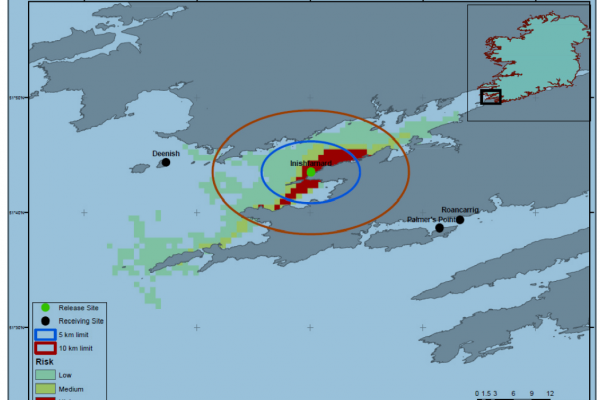
Kenmare Bay is located in the South West of Ireland and is home to two currently operating salmon farms (Deenish and Inishfarnard) owned and operated by MOWI. There are two other farms within the bay which are not currently operating with a further application pending for another site near Inishfarnard. The farm at Deenish was ordered to close in April 2019 but has continued to operate pending the outcome of an appeal which has yet to be determined. This situation is appalling considering that five years have elapsed without any sign of determination. The farm has been allowed to continue to the detriment of the once famous sea trout fishery in Waterville. This fishery had the potential to generate up to three million euro for the local economy but is essentially now derelict with little if any angling tourism in the area. Make no mistake this fishery can be returned to a vibrant fishery with economic prosperity returning if salmon farming is removed from Kenmare Bay. No sea trout fishery has ever survived along side open pen salmon farming and Waterville is no exception. This situation is completely mirrored in the west of Ireland, Scotland and Norway. It is worth noting that when the farms in Kenmare Bay were closed in the period from 2004 to 2009 there was a substantial increase in sea trout numbers and a rebalancing of the population through all age groups. Waterville is home to genetically distinct sea trout and are a national asset which has been effectively destroyed by salmon farming. In 2023 MOWI applied for a renewal of their expired licences for Deenish and Inishfarnard and this is under examination by the Department of Agriculture, Food and Marine and is awaited with interest by all. There were a significant number of objections to these applications so we await determination but we expect this may take some time if previous experience is anything to go on. We would like to draw your attention to our submissions regarding the renewal applications and feel free to extract information to bolster your understanding of the issues surrounding salmon farming in Ireland. Inishfarnard Submission Deenish Submission
Continue reading -
Opening Remarks AGM – Salmon Watch Ireland
Welcome to Salmon Watch Ireland’s AGM for 2023 being conducted by Zoom. This meeting is primarily held to conform with our obligations under the Companies Act. 2023 was again a year primarily dominated by our Judicial Review on the decision to award an aquaculture licence to MOWI in Bantry Bay. Having taken the decision to enter into this legal process it was necessary to devote a considerable amount of time to research our main avenues of approach to the legal process. The Judicial review took place in April/May and was a very complex case involving three separate parties taking the review namely IFI, SWIRL and Sweetman and others including FISSTA. The judgement is still outstanding, and we are certainly concerned at the time period this judgement is taking to finalise. We certainly agree that the hearing of the case was exceedingly fair and indeed comprehensive with all parties given a fair hearing. The judgement is listed for mention again in October, but we may see a judgement at a date earlier. I would like to thank all our directors and indeed our members and supporters who helped to prepare and support us both financially and with advice which enabled us to pursue this case. The 2023 salmon run in Ireland was extremely poor with regard to both grilse, and spring salmon. Certainly, it is probable that it was the lowest return in the time series. It will be interesting to see how this will be reflected in catch statistics and indeed how the fish counter report might illuminate and reinforce our view of stocks. It is also interesting that spring stocks in 2024 suggest extremely poor returns which feeds into the narrative that linkage exists between grilse and MSW stocks in regard to survival at sea in first year. The return of salmon to Ireland is in a very precarious position with stocks now at 10% of historic highs. This is also reflected in most countries supporting Atlantic salmon stocks with UK and Norway showing a similar decline. There is also evidence that the decline in perceived strongholds like Iceland and the Russian Federation is now accelerating and showing a similar worrying trend. The scale and basin wide declines are consistent with oceanic influences which may be related to warming SST which can and does have cascading influence on currents and productivity at sea. It is also worth noting that Baltic salmon saw a dramatic decline in 2023 which would certainly be remote from Atlantic influence, so a climate explanation is suggested. There is also a suggestion that unregulated high seas fisheries directed at Atlantic salmon may be occurring but evidence of this is currently not reliable, but areas of concern are North of Faroes and South of Greenland. These areas are consistent with fisheries for salmon which were carried out by the Faroes and Greenland during 1970s and 1980s. However, the evidence of these fish coming to market is not available. We do know that there are complex reasons which dictate strength of salmon populations but with a background of practical elimination of legal harvest it is not beyond the possibility that other illegal directed fisheries have grown in international waters. This must be investigated by NASCO and must include a directed and well-resourced program going forward. The newest threat to Atlantic salmon is certainly the vast and continuing expansion and strengthening of the pink pacific salmon presence in the North Atlantic. While these fish would appear to present difficulties in freshwater, we would suggest that vast populations of these fish are now at sea in Northeast Atlantic and certainly will further compete with all species in traditional feeding areas for Atlantic salmon. There is anecdotal evidence that pink salmon have reduced other pacific salmon populations through competition in North Pacific. Coming closer to Ireland it is quite evident that we have enormous problems in regard to water quality and other issues related to loss of biodiversity. It is alarming that the regular updates on water quality by the EPA usher in a consistent and robust denial of the role that agriculture plays. The agriculture lobby is strong politically but the derogation situation in regard to organic nitrogen limits will have to be discontinued and SWIRL will be actively promoting its removal. The spectre of lack of investment by the state in wastewater infrastructure is now coming to a head with a renewed investment in housing with consequent overload of already inadequate treatment plants.Again, SWIRL will be seeking to empower local communities to make observations on planning to seek proper and reliable infrastructure. We have also continued to engage in regard to open cage salmon aquaculture with a large number of submissions in regard to renewals of expired licences. We also are still awaiting a determination of our EU complaint against Ireland in relation to legislation surrounding salmon aquaculture. The issue of mortalities on Irish salmon farms has been consistently mentioned and is outside international norms which is certainly reflective of an industry which should never be operating in Irish waters. Mortalities and disease are certainly indicative of a dangerous near coastal environment which has the probable outcome of many negative outcomes for wild salmonids. SWIRL again has been at the forefront in calling for exploitation being reduced substantially. The commercial harvest of salmon is certainly not consistent with low stock levels and needs to be dis-continued while more protection of salmon from over harvest by other stakeholders is a necessity. Directed conservation is required with larger fish requiring more protection. We still view the allocation of ten tags as being over generous in times where salmon stocks are at such low levels. We have consistently not called for mandatory catch and release in rivers with a surplus, but we certainly cannot be happy in a situation whereby certain stakeholders may be compromising the calculations through inaccurate returns. Accordingly, we have made suggestions on how the process can be improved to increase accuracy. It would not be incorrect to suggest that very few salmon catchments are managed in an effective way. We need a situation where properly resourced management structures on rivers lead to a better outcome for the resource.To this end SWIRL has taken a strategic evaluation of our focus going forward and have decided to endeavour to empower local communities to act in the interests of salmon conservation through practical actions facilitated by resources provided by us. We again facilitated an annual conference and awarded the Salmon Hero Award for the excellent and ongoing work on the Suir Tributaries. The award is in recognition of local community involvement in preserving local salmonid populations through practical actions. These annual conferences serve as a very important information resource to which all stakeholders can engage in and will certainly be continued and expanded. ENDS.
Continue reading -
NASCO Conference, Westport, County Mayo 2024
The annual North Atlantic Salmon Conservation Organisation (NASCO) conference was held in Westport County Mayo from June 3rd to 7th . The NASCO conference is dominated by the government parties with limited but important input to discussions by the NGO'S. Ireland is well represented by our NGOs (including SWIRL) and our viewpoint on management of the resource is primarily focussed on conservation. There was a general consensus among all parties that Atlantic salmon have reached a point whereby their very existence may be compromised and that they certainly face extirpation in many rivers. In the face of those threats NASCO adopted a new strategy and an action programme with the goal to ‘prioritise and drive actions necessary to slow the decline of wild Atlantic salmon populations and demonstrate that restoration is possible’ (https://nasco.int/wp-content/uploads/2024/04/CNL2413_The-Future-of-NASCO-%E2%80%93-a-Ten-Year-Draft-Strategy.pdf). While accepting that salmon abundance may not be achievable in short term or indeed medium term, it is incumbent that we should concentrate on maximising the production of wild healthy juveniles and maximise the spawning potential of all catchments. Among the other major issues addressed by the conference were: The threat posed by pink salmon to wild Atlantic salmon (https://nasco.int/wp-content/uploads/2024/05/CNL2421_Report-of-the-Meeting-of-the-Working-Group-on-Pink-Salmon.pdf): New guidelines on stocking which again emphasise the need confine restocking to the very limited situations where extirpation is threatened (https://nasco.int/wp-content/uploads/2024/04/CNL2410_Report-of-the-Meeting-of-the-Stocking-Guidelines-Working-Group.pdf). All of the conference material is available at following link https://nasco.int/annual-meeting/forty-first-annual-meeting-2024/ To help in this matter Salmon Watch Ireland is asking all angling stakeholders to minimise their impact on remaining stocks. The angling stakeholders have a choice and can limit their catch. The over generous national limit of harvesting ten salmon should be substantially reduced this year by the voluntary actions of the angling community. We would ask that angling is carried out with a view to releasing fish by using appropriate methods. We also request that salmon of over 65cm be released and no fish should be harvested in September. The choice to do this is voluntary and we will be asking that these over generous rules involving individual harvest by anglers to be substantially reduced going forward. While we have requested that commercial fisheries should be closed going forward we are going to canvass the commercial sector this year to reduce their effort and limit their uptake of quota.
Continue reading -

Request for Atlantic salmon conservation initiatives in month of September
Salmon Watch Ireland is asking the angling community to help preserve Atlantic salmon stocks by returning all salmon during the month of September. The background to this request is that the Atlantic salmon has faced a devastating downward spiral over the last number of decades but the past number of years have demonstrated an accelerated decline. While Salmon Watch Ireland has consistently supported the scientific process involved in managing Ireland's salmon stocks on an individual catchment basis, it is time to consider whether exploitation can continue in September this year, given the perilously poor catches experienced in Ireland and indeed throughout UK and further afield. While forecasting returns of salmon can be difficult there must always be scope to manage stocks on a real time basis and accordingly we will be suggesting major changes to the present way harvesting of salmon is managed. The advice for 2023 from the Technical Expert Group on Salmon in regard to rivers where surpluses were forecast, appears not to have materialised, and thus we as a conservation body are strongly advising the angling community to think of the next generations of salmon and return fish on a voluntary basis during September. These fish in September are more readily caught by rod and line as they exhibit heightened aggression so releasing fish is your way of demonstrating that you are playing your part in support of wild salmon. While we cannot influence individual attitudes it is hoped that such an initiative may help to get more salmon spawning this coming winter. The following graphs are taken from TEGOS advice and illustrate that 2022 was the lowest count of grilse on record which will almost certainly be much lower in 2023. The spring was exceptionally poor in 2023 which demonstrates an apparent link to survival at sea during the salmon's first year at sea.
Continue reading -

AGM Remarks by Chair John Murphy
Remarks by John Murphy, chair of the board of Salmon Watch Ireland CLG, to the company’s annual general meeting on Monday 19th June 2023. Welcome to Salmon Watch Ireland’s AGM for 2022 being conducted by Zoom. This meeting is primarily held to conform with our obligations under the Companies Act. 2022 was a year primarily dominated by our impending Judicial Review on the decision to award an aquaculture licence to MOWI in Bantry Bay. Having taken the decision to enter into this legal process it was necessary to devote a considerable amount of time to research our main avenues of approach to the legal process. I would like to thank all our directors and indeed our members and supporters who helped to prepare and support us both financially and with advice which enabled us to pursue this case. The Judicial Review took place over four weeks in April /May 2023, and we expect an outcome in the near future. The 2022 salmon run in Ireland was extremely poor with regard to grilse, but spring salmon runs appeared to be on an upward turn although from a low stock level. The low level of grilse last year did manifest as a very poor reported spring salmon stock this year with anecdotal evidence suggesting a collapse in the majority of fisheries both here and the United Kingdom. Generally speaking, this may be related to the abnormally low river levels which greeted the adult stocks here and UK in 2018. This was also mentioned by the ICES working group on North Atlantic salmon and seems to be a recurring theme with the summer of 2022 experiencing very low water levels. Again, there is no need to mention this year as the trend continues. On a more positive note, the early spring this year did favour a more positive environment for smolt migration. These fish are the progeny of the 2020 run of adults which showed a very welcome upturn in stocks. The IFI fish counter data is indicative of an increased run of spring fish in 2022 but a large decline in grilse stocks and is probably at an all-time low when looked at over an extended period. It is evident that climate is causing a very poor environment for Atlantic salmon and these periods of low flow in conjunction with high water temperatures cause a cascade of effects with predation and biological factors having a significant negative effect on juvenile and adult survival. In conjunction with the pressures at sea it is evident that the future is far from secure. While most of these factors may be out of our control, we must continue to endeavour to maximise the amount of wild healthy smolts going to sea. It is interesting to note that a recent study in the UK noted that larger smolts survived to return at three times the rate of smaller smolts. Again, with a warming climate, can we expect larger wild smolts, I would suggest not. The publication of the state of Irish waters by the EPA for 2022 notes little improvement in regard to nitrate levels in Irelands rivers and lakes and is a major concern for salmon survival. It is evident that the farming community are engaged in a political agenda with little concern for climate or indeed the wider environment. Unfortunately, the vote on the recent legislative change at EU level in regard to protecting degraded land was postponed for one month which is disappointing but demonstrates that there is a considerable opposition to protecting nature which is all too evident within this country. With changing weather patterns, we are seeing a very substantial reduction in rainfall during critical periods for salmonid migration which only exacerbates an already precarious situation. In early 2022 we sought through FOI correspondence between Minister Eamon Ryan and Minister Charlie Mc Conalogue regarding sea lice and their impact on wild salmonids. This was further illuminated by the Irish Times in August and a special segment on Prime Time followed in October. It is very significant in that a government department was willing to take on DAFM regarding their rather benign interpretation of the impact that salmon farming has on wild salmonid stocks. IFI were very robust on the Prime-Time program which is a welcome departure from previous pronouncements on the subject. This was further demonstrated with their participation in the Judicial Review. There appears to be a more proactive approach from IFI and there is further evidence that they are ramping up pressure with the recent job advertisement looking for a project manager to investigate nationwide introgression from farm escapees. These developments may have a bearing on future JR procedures. Mark Boyden from the Coomhola Salmon Trust was the recipient of our Salmon Hero Award in 2022. Mark has been at the forefront of educating Irelands school children on salmon matters for the best part of 30 years. He was most appreciative of our efforts to conserve Atlantic salmon. We did not hold a conference in 2022 but hope to hold one in 2023. Our focus has somewhat been overwhelmed by the judicial review process but we would hope to concentrate more on other issues going forward. The issue of commercial exploitation of salmon is causing a serious amount of controversy and our policy to effectively finish this practice must be revitalised. It is not an attempt to change the location where salmon are harvested as we also would like to limit exploitation by recreational anglers. The ability to harvest ten salmon by anglers is certainly not sustainable from a moral point of view and should be reduced significantly. It would be our intention to seek a redesign of the management of our salmon stocks with a review of conservation limits and surplus determination. It may be time now to increase the statistical probability of 75% of reaching a conservation limit to a higher number thus taking a more precautionary approach in these volatile times for salmon survival. On the aquaculture front we will continue to oppose open cage farming and intend to design a template for publication which will allow all to oppose licences in a concerted, legal and scientific manner. With stocks in such a precarious situation it may be time to examine rebuilding strategies. It is obvious that certain rivers have radically insufficient stocks to repopulate rivers. In these rivers we must use the best available strategies to rebuild stocks ENDS:
Continue reading -

High Court Case – Judicial Review
The High Court Judicial Review Case involving Salmon Watch Ireland in regard to the granting of a licence by the Aquaculture Licence Appeal Board has finished. The case was conducted over four weeks and involved Salmon Watch along with Inland Fisheries Ireland and Sweetman and others including FISSTA against the Aquaculture Licence Appeals Board and the Minister of Agriculture Food and the Marine. MOWI were listed as a notice party and took an active part in proceedings. The case was held before Judge David Holland and was very complex in nature. It is expected that a reserved judgement may be available in a number of weeks but that final judgement may not be available until July. Overall the case has many complex issues in regard to Irish and European law involving the EIA Directive, Water Framework Directive and the Irish legislation to comply with these European Directives. It is impossible to say if the judgement will be favourable but we must at this point congratulate all parties who brought this Judicial Review in order to protect wild salmonids. We would like to thank our legal team for their work on the matter and look forward to the many issues that may come to the fore in future years.
Continue reading -

Irish Times Article -Tim Mc Cormick
Are Open-Pen Salmon Farms Really Sustainable? Open-pen salmon farms have been encouraged here. But how well do they fit these criteria? Salmon farmers frequently proclaim the sustainability of their industry, claiming that they are eco-friendly and are creating a new blue revolution with their protein rich product. But increasingly their claims are being questioned on the basis of scientific evidence, sometimes from unexpected quarters. In December 2018 Marine Harvest, the world’s largest producer of Atlantic farmed salmon, held an AGM to change its name to MOWI in honour of its founder, Thor Mowinckel. At the meeting an 84- year-old shareholder castigated the company for polluting nature, wildlife’s habitat and ecosystems, while threatening the future of future generations. He wanted to see a move to land-based farms. The speaker was Thor Mowinckel himself. He voted against the name change in protest. Others agree with him, as MOWI found out to their cost. In 2021 they were sued in the USA for “false marketing.” They settled the case for $1.3 million and agreed not to use the terms “sustainable” or “eco-friendly” in their advertising there. Currently MOWI is seeking to construct a large farm in Connemara. The International Experience Open-pen farms have been banned or heavily restricted in many countries, because of the environmental damage they cause. They never existed in English or Welsh waters. They are banned in Denmark, Southern Argentina, and the Pacific States of the USA: Alaska, Washington State and California. British Columbia is transitioning away from them. After a ten-year moratorium, they are now permitted in Chile, but not in protected marine areas. Norway regulates them strictly, fining rule breakers. Licences for sea farms are expensive, while land-based farms are free. A production tax on output was recently introduced. This provides farmers with an incentive to expand overseas, where regulation is lighter. Scotland is facing an increasing clamour for tighter regulation. 2 major recent applications have been Ireland is different. Fish farms are encouraged and subsidised with taxpayer grants. The licencing system is minimal with some farms permitted to stay open, even though their licences are more than ten years expired. The Government is even willing to entertain licence applications in Special Areas of Conservation. The Irish Government is currently drafting a National Strategic Plan for Aquaculture Development 2030. The plan aspires to provide: 1. Nutritious and healthy seafood with a limited environmental footprint. 2. Economic development and job opportunities for coastal and rural communities. 3. A reduction in pollution. 4. Preserve ecosystems and biodiversity. 5. Contribute to the fight against climate change. Healthy Food: Toxic chemicals, used to treat sea-lice can contain pathogens, which contaminate farmed salmon, In Canada and Scotland farmers have been found to use illegal poisons. Artificial colourants change the natural grey flesh of farmed fish into the chosen shade of pink. Nutritionists are concerned about dangers, to children, pregnant women and people with a history of cancer. In general controls are minimal and over-reliant on self-regulation. While there is now much talk about ‘organic salmon farming,’ there is much disagreement about the criteria. Certainly, the product so labelled commands a premium price. It claims to be sustainable. But the fish still need to be produced in cages and treated for disease. It seems bizarre that salmon, which have been chemically treated for sea-lice either directly or through their food and are artificially coloured can be classified as ‘organic.’ Improvements in fish husbandry are welcome, but strict boundaries need to be agreed and properly monitored, a challenging task for the present regulatory system. Environmental Footprint: The environmental issues, excluding pollution, fall under 3 categories: Sea-lice. It has long been known that an infestation of sea lice, which thrive in the cages, poses a serious threat to wild salmon and seatrout. Sea trout, being coastal feeders, are particularly badly affected. In 2019 BBC Panorama showed a wild fish covered with 747 lice and a diver who described the barren seabed and the fish as being “essentially eaten alive.” Farms in Ireland regularly exceed their permitted sea-lice limits. Recent scientific research on Irish rivers, has clearly shown that heavy lice infection during the smolt migration period has resulted in reduced runs of returning adult salmon the following year, ranging from 19% to 46%. The Irish Government chooses to rely on their in-house scientists from the Marine Institute, who downplay the significance of lice, rather than the overwhelming evidence from Norway, Scotland, Canada and, most importantly, IFI, Inland Fisheries Ireland. Escapees’ Risk: Fish farm escapees constitute a serious risk, since they may interbreed with wild fish, while also competing for spawning redds and food. Shortly after 48,000 fish escaped in 2021 from a MOWI cage in Scotland, 17 rivers in Scotland and England reported the presence of farmed fish. Fisheries Management Scotland attributed the majority of them to this MOWI outbreak. Escapees can disperse widely and quickly. The consequences of a major escape are serious. MOWI was fined over $6m in 2020 for an escape of 690,000 salmon in Chile. The watchdog stated that this constituted “irreparable environmental damage.” They found that MOWI had failed to maintain appropriate security standards and had used substandard equipment. They emphasised the risk to the marine habitat from “decomposing mortality,” together with the transmission of pathogens and disease. Disease: Compared to the 3%/5% commonly found in chicken or cattle farming, mortality in fish farming is high, estimated at 40% in Ireland. It seems that our warm waters help to spread disease commonly found in cages quickly. Pollution: Open-pen farms can be compared to a town with no sewerage system. The faeces, surplus food and chemicals drop to the seabed, which becomes barren under the cages. They are rarely adequately dispersed by tides, becoming a hazard to the surrounding marine life. The scale of pollution is serious. The Scottish National Trust estimates that the untreated pollution of a 2,500-tonne farm equates to that of a town of 16,000 people, where the sewerage is, of course,treated. The community bears all these environmental costs, estimated by one economist as 40% of total costs, while the polluter avoids payment. The revenue, meanwhile, usually flows to large foreign multinationals. Employment: Full time employment in existing farms has been declining in recent years, probably due to increased automation and new job creation has sometimes been exaggerated. If inshore fishermen are deprived of their livelihood, there may be no net increase in employment. On the east coast of America local shell fishermen with strong local support successfully opposed major pens off the coast of Nova Scotia and off Maine. Pollution and unsightly cages must also damage employment in both angling tourism and tourism generally. Ecosystems and Biodiversity: The most serious ecological charge against open-pen farms is that they are endangering the dwindling population of wild salmon. Irish salmon numbers have declined by almost 80% in the last 20 years. Open-pen farms also devastate areas of the seabed, out of sight, except to divers, destroying shellfish and other marine life in the vicinity of the cages. As Tasmania has now discovered, its ocean floors have become increasingly barren, birdlife vanishes, and rare fish are threatened with extinction. The use of fish meal and salmon oil from wild fish is highly controversial, seriously damaging the food chain. Salmon feed involves dredging enormous volumes of small wild fish. Consequently, the fish population in third world countries from West Africa to Peru have been seriously reduced, depriving the population of an important source of food and their fishermen of their livelihood. Climate Change The industry has a significant carbon footprint, especially with transportation. It also seems that our warmer waters make us more exposed to algae bloom, gill infection and aggressive jellyfish, which enter the cages. In a Bantry Bay farm there were around 100,000 deaths in 2021, due to an outbreak of algal bloom. Shallow coastal water makes them vulnerable to the rapid spread of pollution and disease. In an era of global warming this situation is unlikely to improve. Climate change can only exacerbate the problems. The industry may change. There are now at least 75 land-based projects in the planning stage, under construction or already in operation. New Zealand is joining Maine, Florida and Wisconsin in the US, as well as Switzerland, Dubai, China and Japan. Thor Mowinckel must be pleased. But open-pen salmon farms fail to meet any of the criteria set out in our National Strategic Plan for Aquaculture and should not form part of our future aquaculture industry. Published in the Irish Times, February 2023.
Continue reading -
Deenish Island – Waterville Sea Trout Collapse Continues
The prospect of the Salmon Farm at Deenish Island being restocked with over 400,000 smolts in the coming weeks should fill anglers and conservationists with dismay and anger. The farm was ordered to close by the Minister for Agriculture, Food and the Marine in April 2019 for gross over harvesting at the site. The MOWI owned farm which is less than nine kilometers from Lough Currane has always been a strong source of controversy regarding its effect on sea trout and salmon stocks. Marine Institute Hydro Study - Extent of particle distribution from Deenish Island Site - This is strongly linked to distribution of sea lice larvae A Tragedy for Watervilles Salmon and Sea Trout The appeal mechanism being relied upon by MOWI included a judicial review in the High Court which was adjourned to allow the appeal go to the Aquaculture Licence Appeals Board. This board has had over three years to make a determination but has failed to do so and will not do so before September 2023. This is a disgraceful scenario which effectively allows the farm to continue operations pending a determination of their appeal. The Aquaculture Licence Appeals Board in this case appear to be acting in the interests of MOWI with little regard for the wild salmon and sea trout resource in Waterville. It is interesting to note that there is now no wild fish representatives on this board and we strongly suggest that the board has little interest in wild salmonids and has demonstrated this by their abject failure to reach a timely determination. Meanwhile sea trout stocks are now extremely poor and the prospect of recovery is being eroded with each passing year. The upcoming stocking at the site will effectively allow the continuation of this tragic outrage for a further two years. It is time that the independence of this board is strongly questioned. Being financed and effectively controlling its composition, the Department of Agriculture, Food and Marine has also serious questions to answer. We will be appending this note to our EU Complaint to demonstrate the serious malpractice evident in the workings of ALAB and DAFM. We are asking our supporters to send this link to their local representatives and ask their assistance in bringing this situation to a positive conclusion which favours the vastly important sea trout and salmon resource in Waterville County Kerry. Further Information available in following links: Deenish Island – Salmon Watch Ireland Submission – ALAB Deenish Island – Contradictory and inaccurate records reveal a shocking story Update on Deenish Island Salmon Farm Salmon Farming:Complaint to the Commission of the European Communities about the Government of Ireland’s failure to comply with Community law.
Continue reading